
Basement Waterproofing in Palomar, Lexington KY: What You Need to Know Before Spring Rains Hit Hard
If you live in Palomar and your basement smells like a wet dog after every rainstorm, that's not normal — and it's not something you should ignore until it gets worse. I'm Manny Santos, owner of Handy Manny's LLC, and I've been doing construction and home repair in Central Kentucky for 25 years. I've seen what water does to a home's foundation when homeowners wait too long, and I've seen the relief on people's faces when we fix it right the first time.
Palomar is a great neighborhood — solid mix of established homes and newer builds, some sitting on sloped lots, all of them dealing with the same Kentucky reality: heavy clay soil that holds water like a sponge, and spring rains that push that water table up fast. Right now, in April, is exactly when basement water problems show up. If you haven't looked at your basement after the last few rainstorms, now is the time.
Signs Your Palomar Home Needs Basement Waterproofing
Water problems in a basement don't always announce themselves with a flood. More often, they creep in slowly. Here's what to look for:
Musty or moldy smell. This is the most common early sign. Even if the floor looks dry, moisture seeping through the walls feeds mold growth you can't see. That smell is mold. It doesn't go away on its own.
White or gray mineral deposits on walls (efflorescence). Those chalky, powdery streaks on your concrete block or poured walls are left behind when water moves through the wall and evaporates. It tells you water is actively migrating through your foundation.
Cracks in the foundation walls or floor. Hairline cracks are common in older homes and many are harmless — but horizontal cracks or cracks that are widening are serious. Kentucky's clay soil expands when wet and contracts when dry, putting constant lateral pressure on foundation walls. Some Palomar homes, especially those on sloped lots with a higher uphill side, get hit harder by this.
Standing water or wet spots after rain. Obvious, but worth stating: any pooling water in your basement after rain means water is getting in faster than it's evaporating. Don't mop it up and hope it stops. It won't.
Rust stains near floor drains or wall penetrations. Water carrying iron minerals leaves rust trails. Rust around your water heater base or near pipe penetrations is a red flag.
Interior vs. Exterior Waterproofing: What's the Difference?
There are two main approaches to basement waterproofing, and they solve the problem differently.
Exterior waterproofing goes after the source. We excavate around the foundation, apply a waterproof membrane or coating to the outside of the wall, install drainage board, and redirect water away from the foundation before it ever gets in. This is the most thorough fix. It's also the most involved — it requires excavation, which means labor and equipment costs. For homes in Palomar where the lot grade is pushing water toward the foundation, exterior work often makes the most sense long-term.
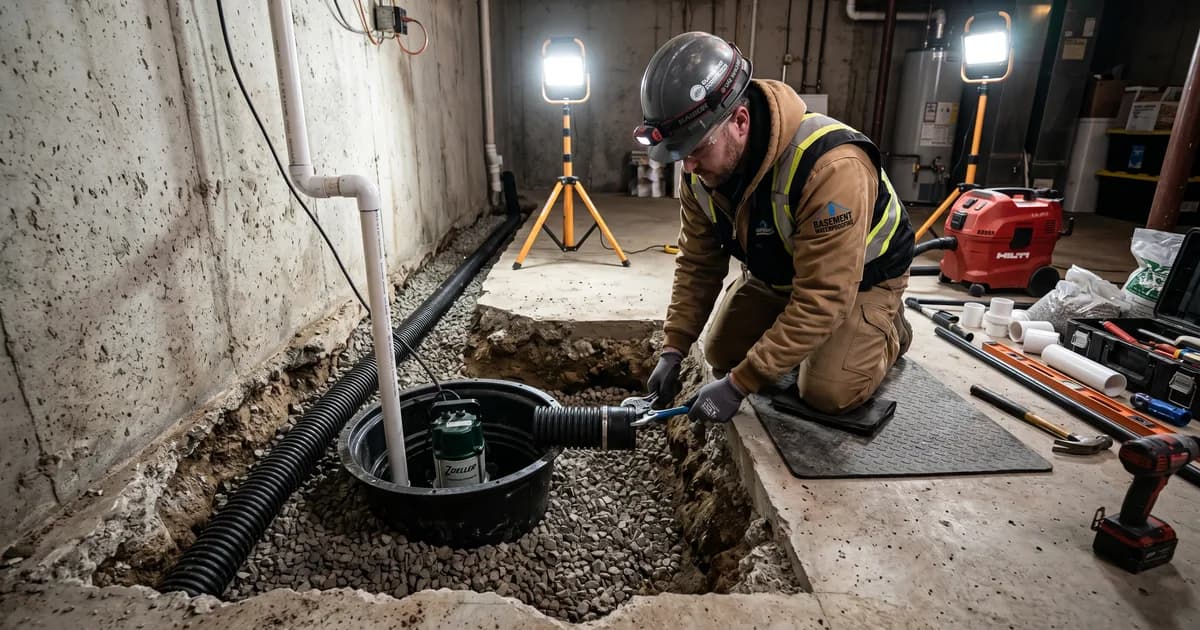
Interior waterproofing manages water after it enters the foundation system. The most common interior approach is a perimeter drainage system — we cut a channel along the interior footing, install a perforated drain pipe, direct it to a sump pit, and pump the water out. This doesn't stop water from entering the wall, but it intercepts it before it can pool on your floor or wick up through your slab. Interior systems are less disruptive, faster to install, and lower cost than exterior excavation. For many Palomar homeowners, this is the practical solution.
Both methods can be combined for severe cases or high-value finished basements.
Sump Pump Installation: Your Last Line of Defense
A perimeter drain system is only as good as the sump pump it feeds. If you don't have one, or if yours is more than 8–10 years old, it's worth a serious look.
A properly sized sump pump with a battery backup is essential in Lexington. We get heavy spring rains — sometimes sustained, sometimes in fast bursts — and clay soil means water moves toward your foundation quickly. A power outage during a bad storm is exactly when your pump needs to keep running.
I always recommend a backup pump. The cost difference between a primary-only setup and a primary-plus-battery-backup setup is not that large, but the difference in what it protects is enormous. For a $500K home in Palomar with a finished basement, a $300 battery backup is cheap insurance.
Perimeter Drain Systems: Interior French Drain Done Right
The interior perimeter drain (often called a French drain system) is one of the most effective and least invasive ways to manage chronic basement moisture. Here's how we install it:
- Jackhammer a 12–18" channel around the perimeter of the basement floor, just inside the foundation wall
- Excavate to the footing level
- Lay perforated drain pipe bedded in washed gravel
- Direct the pipe to a sump pit in the lowest corner
- Patch the concrete over the pipe channel
- Install the sump pump
The whole system sits below your floor and is invisible once complete. Finished basements can often be done with minimal disruption to existing framing and drywall, depending on the layout.
For Palomar homes on sloped lots, we sometimes also add a curtain drain outside along the uphill side of the home to intercept groundwater before it reaches the foundation. This is a common upgrade for the older ranch-style homes in the neighborhood that sit on terrain where water naturally drains toward the back wall.
When to DIY vs. Call a Pro
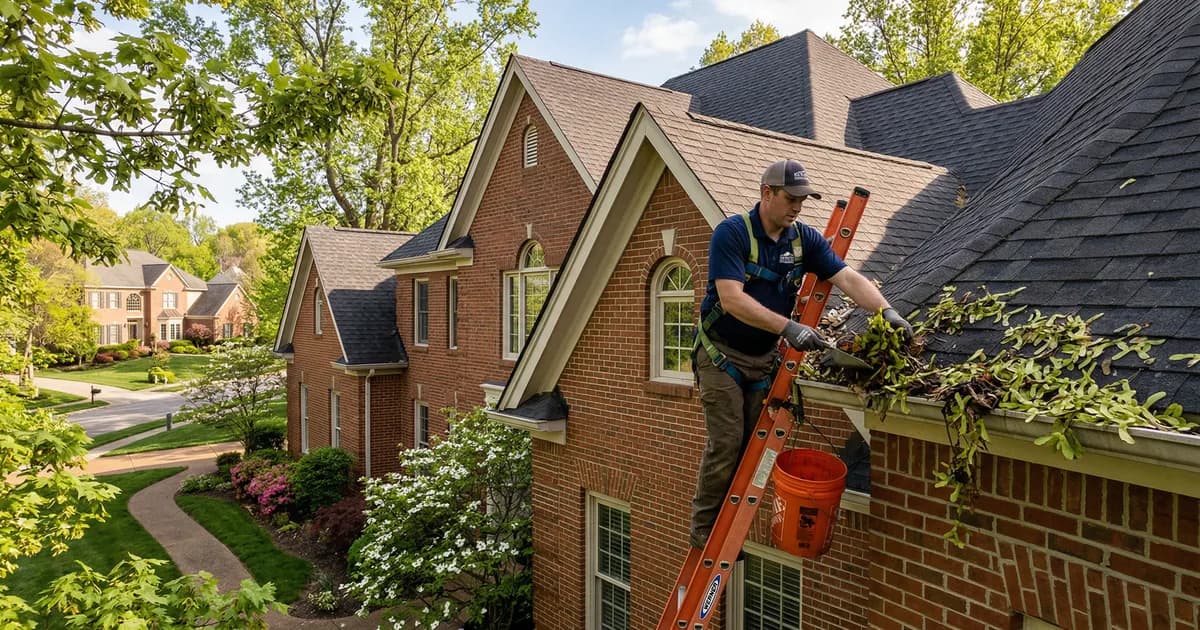
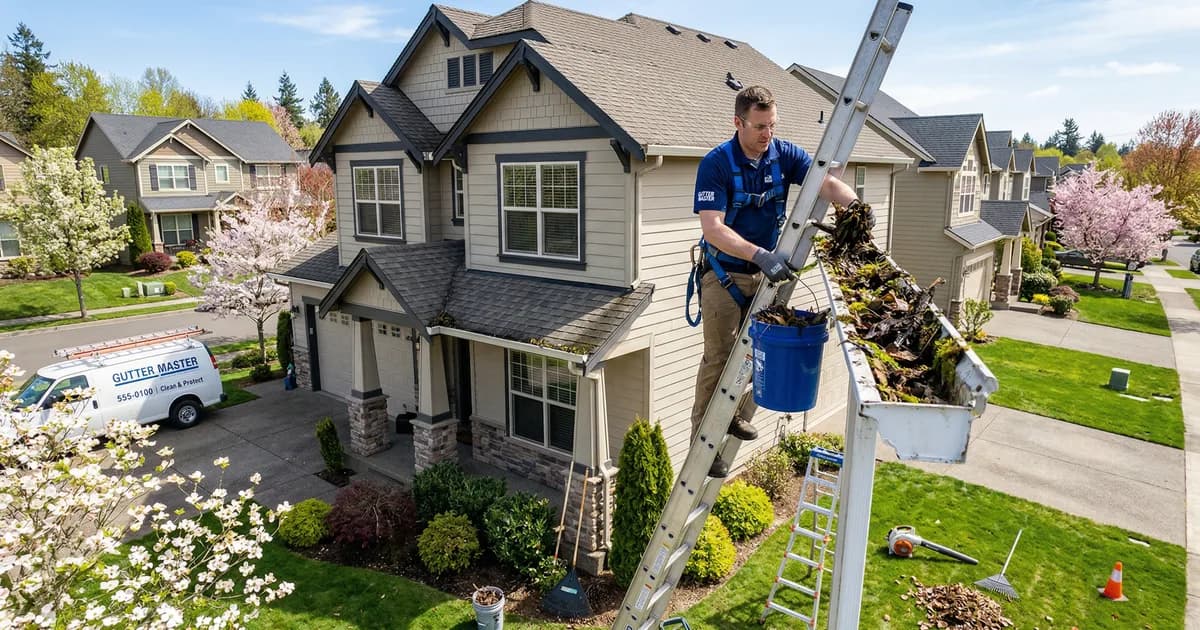
I'll be straight with you: some basement moisture issues are DIY-friendly. Improving your gutters and downspout extensions, regrading the soil away from your foundation, sealing small cracks with hydraulic cement or epoxy injection — a handy homeowner can handle those things.
But the moment you're talking about a perimeter drain system, sump pump installation, exterior excavation, or you're seeing active water infiltration through multiple walls or the floor slab — call a professional. These jobs require proper drainage design, the right pipe sizing, correct sump pit placement, and concrete work that has to be done right or it fails. Done wrong, you spend twice as much fixing the bad job before you can fix the actual problem.
At Handy Manny's LLC, we've been doing this work owner-supervised, hands-on, for 25 years. No subcontractors running the job without us on site. You get Manny or a direct member of our crew — someone who's accountable to you and to the work.
Why Palomar Homeowners Choose Handy Manny's LLC
- 25 years of construction experience across Central Kentucky
- Owner-supervised on every job — we don't send crews out unsupervised
- 5.0 stars on Google, 56 reviews — the reputation speaks for itself
- BBB A+ rated, minority-owned business serving Lexington since day one
- Licensed, insured, and accountable
Call us at (859) 551-5302 or visit handymannysky.com to schedule a basement assessment. We'll look at what's happening, explain what needs to be done and why, and give you a straight number — no upsell, no scare tactics.
Frequently Asked Questions
Q: How much does basement waterproofing cost in Lexington, KY? A: It depends on the scope. A basic sump pump installation runs $800–$1,500. A full interior perimeter drain system for an average basement typically falls in the $3,000–$7,000 range. Exterior excavation and membrane waterproofing costs more depending on the foundation perimeter and access. We provide free assessments so you know exactly what you're dealing with before committing to anything.
Q: Is interior or exterior waterproofing better for Palomar homes? A: Both work well when installed correctly. Exterior waterproofing stops water at the source but requires excavation. Interior systems manage water that enters the wall. For most Palomar homeowners dealing with chronic moisture or standing water, an interior perimeter drain with a sump pump is the right balance of effectiveness and cost. Homes with severe hydrostatic pressure or cracked walls may need exterior work as well.
Q: How long does a basement waterproofing job take? A: A sump pump installation is usually a one-day job. An interior perimeter drain system for a standard basement typically takes 1–3 days depending on the size and any existing finishing. Exterior excavation work takes longer — usually 2–5 days.
Q: Can basement waterproofing be done in spring? A: Yes, and spring is actually a great time to do it — you can see exactly where water is entering and how severe it is. We work year-round in Lexington. Don't wait for summer to "dry out" and then forget about it until next spring when it's worse.
Q: Does a sump pump need maintenance? A: Yes. Test your sump pump every few months by pouring water into the pit to confirm it activates. Clean the inlet screen annually. Most pumps last 8–12 years with basic maintenance. If yours is more than 10 years old, have it inspected before the next heavy rain season — replacing a $400 pump proactively is much better than dealing with a flooded basement at 2am.
Handy Manny's LLC — Lexington, KY | (859) 551-5302 | handymannysky.com | 5.0 ⭐ Google (56 reviews) | BBB A+ | Minority-Owned | Owner-Supervised