
Site development costs can escalate quickly when planning is rushed. Many owners focus on building design first, then discover access, grading, utility, or approval constraints that reshape the entire project. The best time to manage that risk is before excavation begins.
This guide explains what property owners should confirm before committing to site work.
1. Confirm use, zoning, and entitlement alignment
Before design details, verify whether the intended use matches zoning and development requirements for the parcel. If not, approvals can take longer and cost more than expected.
Early checks should include:
- Allowed use and occupancy type
- Setback and height constraints
- Parking and circulation requirements
- Landscaping or buffering obligations
- Any overlay or corridor-specific rules
Land use alignment is a gate condition. If this is unclear, do not treat schedule assumptions as fixed.
2. Understand topography and grading implications
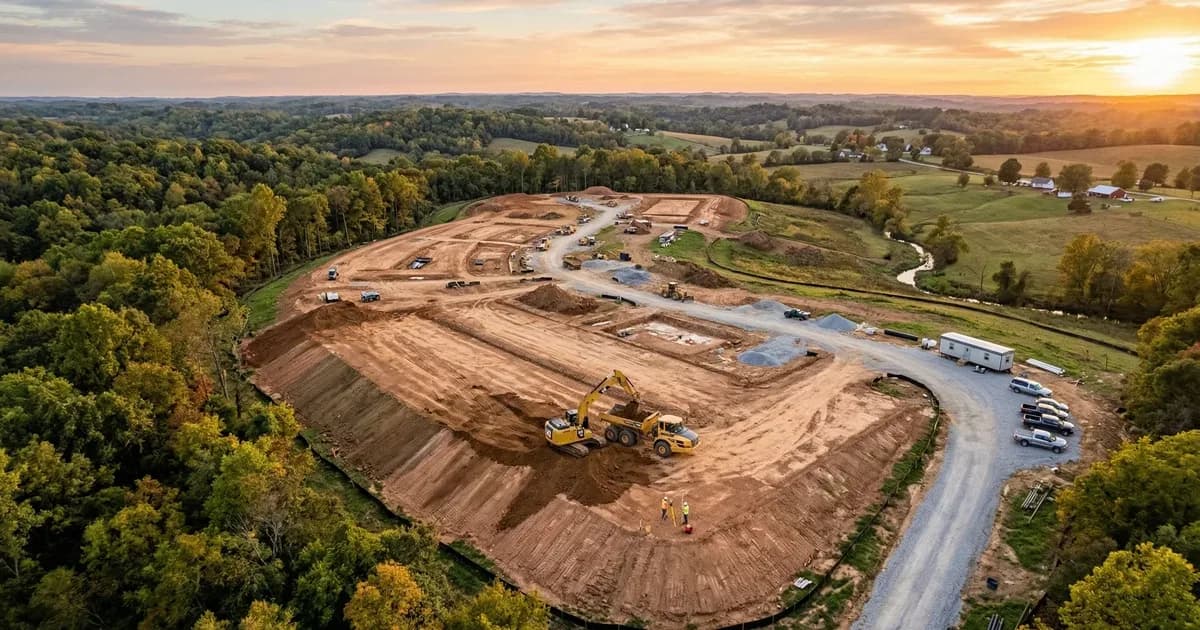
Grading is one of the largest hidden drivers in site budgets. Slope, cut/fill balance, retaining needs, and drainage direction all affect cost and schedule.
Questions to answer early:
- Is mass grading required?
- Does the site need imported or exported fill?
- Are retaining structures likely?
- How will finished floor elevations relate to access and drainage?
A parcel that looks straightforward on a map may require substantial earthwork in reality.
3. Plan utilities before final layout
Utility feasibility can control building placement and phasing. Water, sewer, power, gas, and telecom availability should be validated with providers early.
Common utility risks:
- Connection points farther than expected
- Capacity limitations requiring upgrades
- Easement constraints
- Conflicts with existing underground lines
- Long lead times for service extensions
Owners should treat utility coordination as critical path, not an administrative detail.
4. Address stormwater and drainage strategy
Stormwater planning protects neighboring properties and often drives approval requirements. Late drainage redesign can trigger major rework.
Early stormwater planning should consider:
- Existing runoff patterns
- Required detention or retention features
- Inlet and pipe routing constraints
- Erosion and sediment control sequence
- Long-term maintenance implications
When drainage logic is integrated early, grading, paving, and landscaping plans stay aligned.
5. Validate access and circulation early
Site access affects safety, operations, and entitlement review. Inadequate turning radii, conflict points, or visibility can require redesign late in the process.
Priority questions:
- Where are primary and secondary entries?
- Can delivery and service vehicles circulate safely?
- Are emergency access expectations satisfied?
- How do pedestrian paths interact with vehicle flow?
Access issues are expensive to correct once hardscape is installed.
6. Build a realistic permit path
Site work usually depends on multiple approvals. Owners should map submission dependencies and review durations before setting public timelines.
Typical permit-sensitive elements:
- Earthwork and grading
- Utility tie-ins
- Stormwater systems
- Right-of-way improvements
- Erosion and sediment controls
For structured planning references, review both property development overview and site preparation sequencing.
7. Sequence geotechnical and subsurface risk checks
Subsurface uncertainty can break budgets fast. Soil quality, rock presence, groundwater behavior, and undocumented utilities all affect constructability.
Useful risk controls:
- Geotechnical investigation before final pricing
- Test pits in high-risk zones
- Utility locating and verification
- Contingency planning for unsuitable soils
Owners do not need perfect certainty, but they do need enough data to avoid blind commitments.
8. Align civil design with construction phasing
Civil documents should support phased execution if the project is not built all at once. Without phase-aware design, owners can pay twice for temporary or duplicate work.
Phasing strategy should define:
- Which areas are built first
- Temporary access and drainage controls
- Utility routing per phase
- How each phase hands off to the next
This is especially important for occupied or partially active properties.
9. Budget for weather, logistics, and escalation risk
Site projects are exposed to weather volatility and material market changes. Owners should account for this when evaluating timeline promises.
Budget resilience tools:
- Defined contingency allowance
- Alternate materials for key components
- Weather recovery assumptions in schedule
- Clear change process for unforeseen conditions
A disciplined risk budget prevents reactive decision-making under pressure.
10. Establish communication and decision cadence
Development teams move faster when decision rights are explicit. Identify who can approve scope changes, timing adjustments, and cost impacts.
Recommended governance setup:
- Weekly progress and risk meeting
- Clear owner representative
- Issue log with decision deadlines
- Written record of approved changes
Strong governance reduces idle time in the field.
Common owner mistakes before site development
- Skipping utility validation until late design
- Underestimating drainage complexity
- Treating permit review as a fixed-duration task
- Ignoring subsurface uncertainty in budget
- Starting work before decision governance is defined
Avoiding these errors improves both predictability and outcome quality.
Bottom line
Site development is not just dirt work. It is an integrated planning problem involving approvals, utilities, grading, stormwater, access, and risk control. Owners who verify constraints early can make better budget and schedule commitments before mobilization.
For permit and compliance-specific planning, compare permit and code prep guidance with commercial property development planning to structure next steps.
FAQ
Related Resources from Handy Manny's LLC:
- General Contractor Lexington KY — licensed general contracting in Lexington
- Davis-Bacon Contractor Kentucky — Davis-Bacon compliant contracting in Kentucky
- Commercial Renovation Services — our commercial remodeling services
Call (859) 551-5302 or get a free estimate — we serve Lexington, Georgetown, Versailles, Nicholasville, and Winchester, KY.