
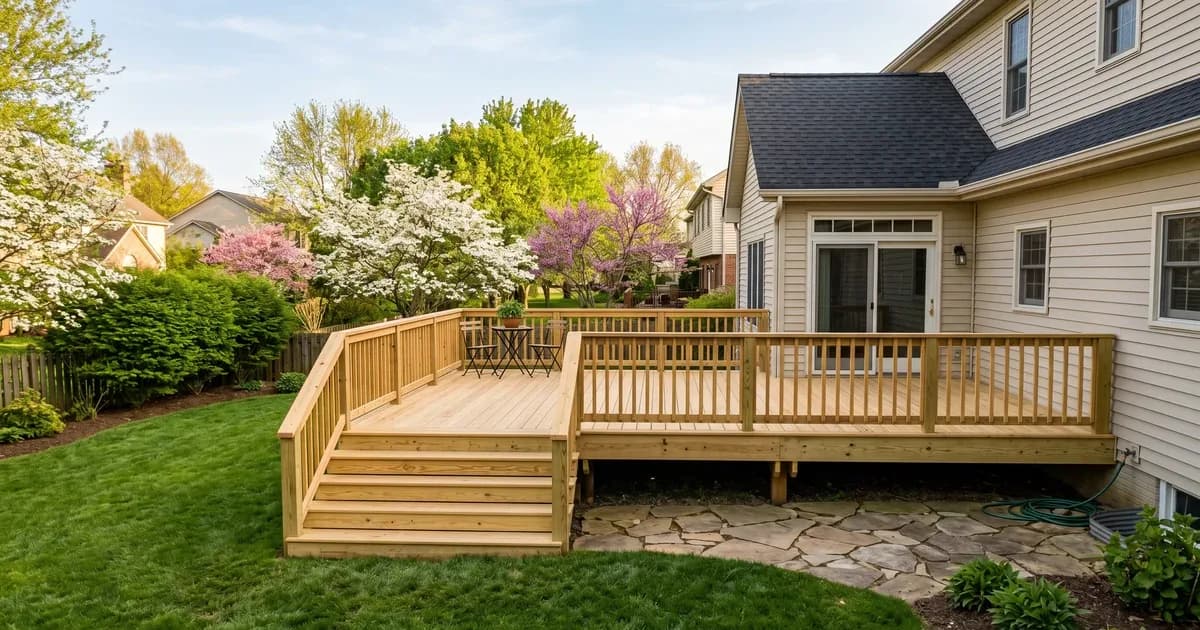
title: "Before & After: A Deck Rebuild in Lexington KY (and What It Really Costs)" description: "A realistic before-and-after deck rebuild story from a typical Lexington neighborhood, with cost ranges, timeline, and what I look for when fixing framing, railings, and stairs." date: "2026-04-18" slug: "before-after-deck-rebuild-lexington-ky-warped-railings" category: "Before/After Project Story" author: "Manny Santos" published: true cover_image: "https://wznxlstwsdka9w7n.public.blob.vercel-storage.com/blog/before-after-deck-rebuild-lexington-ky-warped-ra-before-after-deck-rebuild-lexington-ky-warped-railings-b7ef1d96.webp"
Last week I pulled up to a house in Gardenside and the homeowner met me at the driveway like, “Manny, don’t laugh.”
I stepped out back and I get it. The deck looked fine from the kitchen window. But once you put a foot on it, you could feel the bounce. The top rail had a twist to it, and the stairs had that little side-to-side wiggle that makes your stomach drop.
They’d been babying it for a couple years—no big cookouts, no big groups—because it just didn’t feel solid anymore.
If you’re searching for a deck rebuild contractor in Lexington KY, this post is for you. I’m going to walk you through what we found, what we fixed, what it cost, and the exact decisions that kept the project from turning into a money pit.
The “Before”: What was actually wrong
From the surface, it was “just old wood.” Underneath, it was the normal Kentucky combo platter: moisture, fasteners that had seen better days, and framing that wasn’t built to last.
Here’s what we found when we opened it up:
- Ledger issues. The board that ties the deck to the house was attached in a way I didn’t love. Not an immediate collapse situation, but not something I’d sign my name to.
- Joist hangers and fasteners were mismatched. A lot of decks in Lexington get patched over the years with whatever screws are in the garage.
- Warped and splintering railings. The rails were twisting and the balusters were loose.
- Stair stringers had movement. That “wobble” is usually a connection problem, not just the treads.
- Drainage was pushing water toward the house. That’s how you end up with bigger repairs later (rim joists, sill plates, even interior issues).
One thing I told them up front: I’m not here to shame whoever built it. I’m here to make it safe and make it last.
The plan: rebuild for structure first, looks second
They asked if we could “just replace boards.” I told them the honest answer: we could, but it would be lipstick on a pig.
For this one, the right move was a partial tear-down and rebuild:
- Strip the old decking and rails
- Correct the ledger connection and flashing
- Reinforce framing where needed
- Rebuild rails/stairs to code and to feel solid
- Install new decking and finish details
If you’re reading this from Chevy Chase or Beaumont and you’ve got an older deck, this is the same approach I usually recommend. The pretty stuff is easy. The structure is what protects your family.
What it cost (realistic Lexington ranges)
Deck pricing is all over the place because size, height, materials, and stair complexity matter a lot. But here are real ranges I see every week in Central Kentucky:
- Small deck resurfacing (good framing, new boards/rails): ($4,500–$9,000)
- Typical rebuild (repair ledger + new rails + stairs + decking): ($9,500–$18,000)
- Bigger elevated deck with multiple stair runs and premium materials: ($18,000–$35,000+)
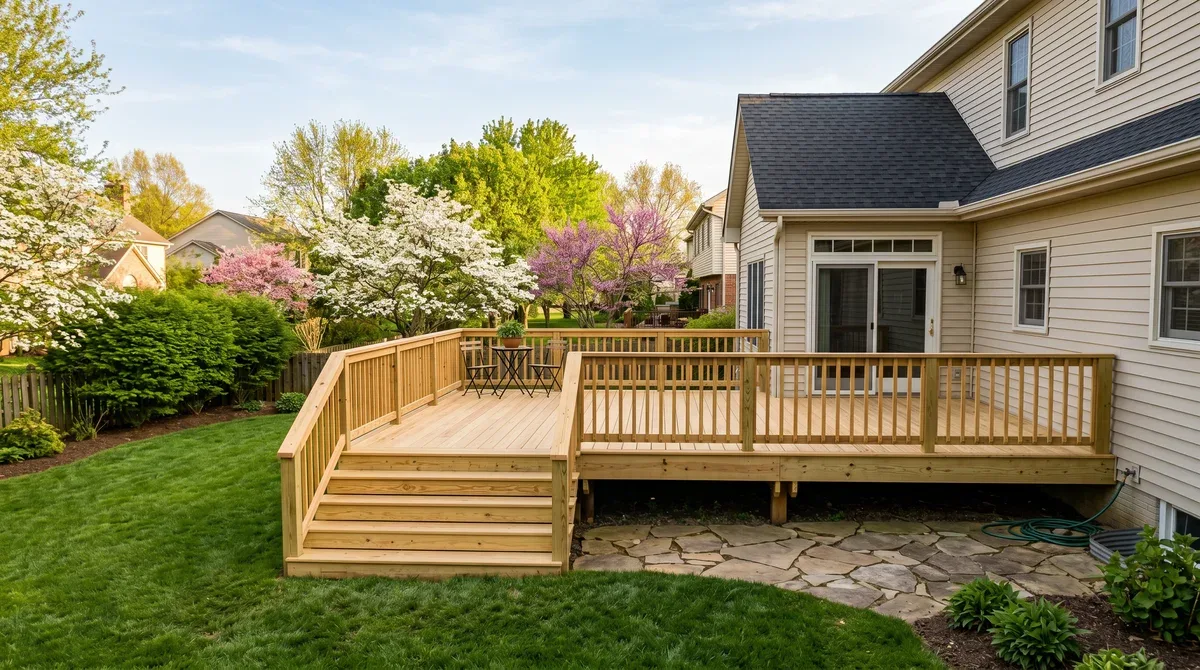
For the Gardenside project, we landed in that middle bucket—a typical rebuild—because the structure needed real attention, but we didn’t get into a full demo down to footers.
If you want me to price yours, I’ll give you a straight answer and options, not a sales pitch.
Timeline: how long a deck rebuild usually takes
Most homeowners worry they’ll lose their backyard for a month. In reality, a lot of deck work is fast once materials are ready.
A typical deck rebuild like this is usually:
- 1 day demo and framing inspection
- 1–2 days framing/ledger corrections
- 1–2 days rails + stairs
- 1 day decking + cleanup
So you’re often looking at 4–6 working days, depending on weather. April in Lexington can be sunny one minute and sideways rain the next, so we always plan for a little wiggle room.
The “After”: what changed (and what the homeowner noticed)
The best compliment I get on deck jobs isn’t “it looks nice.” It’s “it feels different.”
Here’s what was noticeably better after the rebuild:
- No bounce. When framing is stiff and connections are right, you feel it immediately.
- Stairs that don’t move. That’s a safety thing, especially if you’ve got kids or older family visiting.
- Rails you can actually lean on. I build rails like somebody’s going to grab them in a hurry.
- Cleaner drainage away from the house. That helps protect your siding and your rim area long term.
And yes—it looked great too. But that’s just the bonus.
Materials: pressure-treated vs composite (my neighbor-to-neighbor take)
People ask me this all the time, especially around Hamburg and Tates Creek, where folks are balancing “I want it nice” with “I’m not trying to finance a spaceship.”
Here’s the simple version:
- Pressure-treated decking: Lower upfront cost. Needs regular maintenance. It can warp and check over time.
- Composite decking: Higher upfront cost. Less maintenance. More consistent look long term.
If you plan to stay in the house a long time, composite can make sense. If you’re trying to get a safe, solid deck without blowing the budget, pressure-treated done correctly can be a great option.
A few deck rebuild red flags I see all over Lexington
If you’re looking at your deck this weekend, here are the things that make me say, “Call me before you put 20 people out here.”
- Rail posts that feel loose when you shake them
- Stairs that sway side-to-side
- Soft spots near the house
- Hardware that’s rusting out
- A ledger board with no proper flashing
If any of that sounds familiar, it doesn’t mean your deck is about to fall tomorrow. It means it’s time for a real inspection and a plan.
Related projects I can handle while we’re there
Most deck rebuilds turn into a “since you’re already here…” conversation. I don’t mind that at all—as long as we keep it organized.
A few things we commonly bundle with deck work:
- Siding and exterior trim repairs (especially around the ledger and back door area): https://handymannyky.com/services/siding
- Roofing fixes that show up when water’s been running the wrong direction: https://handymannyky.com/services/roofing
- Drywall/paint touch-ups inside if there’s been moisture getting into the rim area: https://handymannyky.com/services/drywall
If you’re not sure what you need, I’ll look and tell you straight.
What to do next
If your deck feels shaky, or you’re seeing warping rails and wobbly steps, don’t wait until the first big cookout in Masterson Station turns into a problem.
Call (859) 551-5302 or get a free estimate at handymannyky.com/contact.