
Storm Damage Roof Inspection in Chevy Chase, Lexington KY — What Every Homeowner Needs to Know This Spring
By Manuel Santos | Handy Manny's LLC | (859) 551-5302 | handymannysky.com
Spring in Central Kentucky is beautiful. It's also brutal on your roof. In Chevy Chase — one of Lexington's oldest and most charming neighborhoods — that combination of aging homes and unpredictable spring storms creates a real risk that a lot of homeowners don't think about until water is dripping through their ceiling.
I'm Manny Santos. I've been in construction for 25 years, and I've inspected hundreds of roofs in Lexington. I'm going to give you the straight talk on storm damage roof inspection in Chevy Chase — what to look for, what older homes are up against, and how to tell a real inspection from a storm chaser looking to make a quick buck.
Why Spring in Central KY Is Rough on Roofs
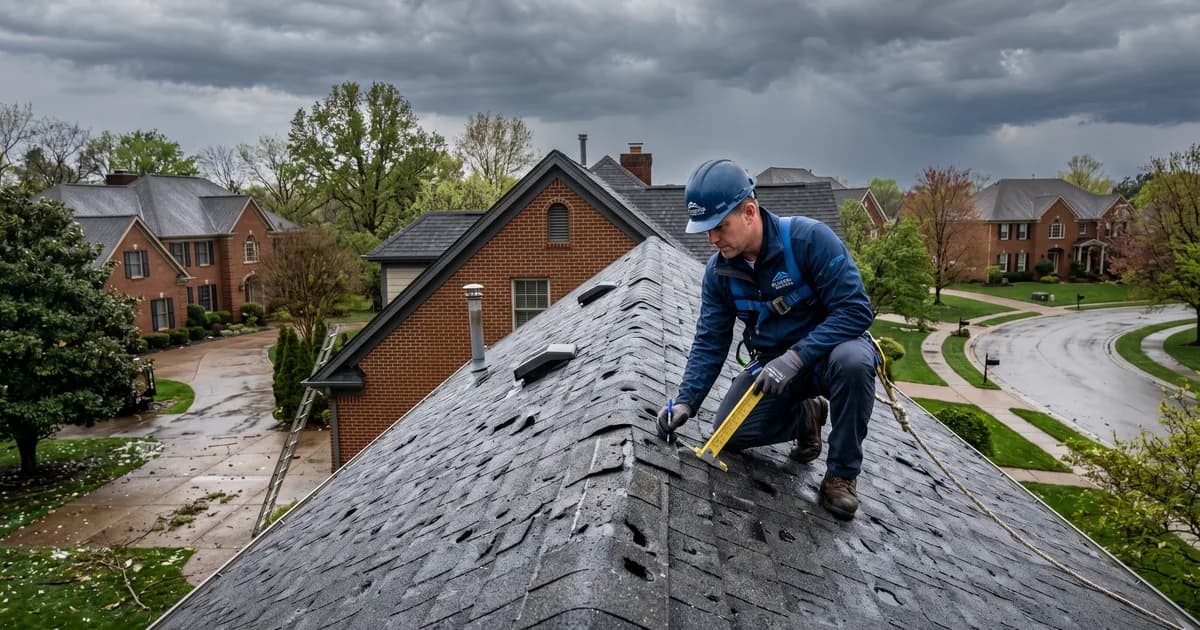
March through May, we get hit with everything: straight-line winds, hail, heavy rain, and the occasional tornado watch. Wind gusts in Fayette County routinely reach 40–60 mph during spring fronts. That's enough to lift shingles, snap branches, and drive water into any weak point in your roof system.
Chevy Chase gets hit especially hard. Mature trees — the oaks and maples that give the neighborhood its shade and character — become projectiles and leverage points in high winds. A branch that barely grazes your ridge can dislodge flashings or crack shingles you'd otherwise never notice from the street.
Why Chevy Chase Homes Are More Vulnerable Than Average
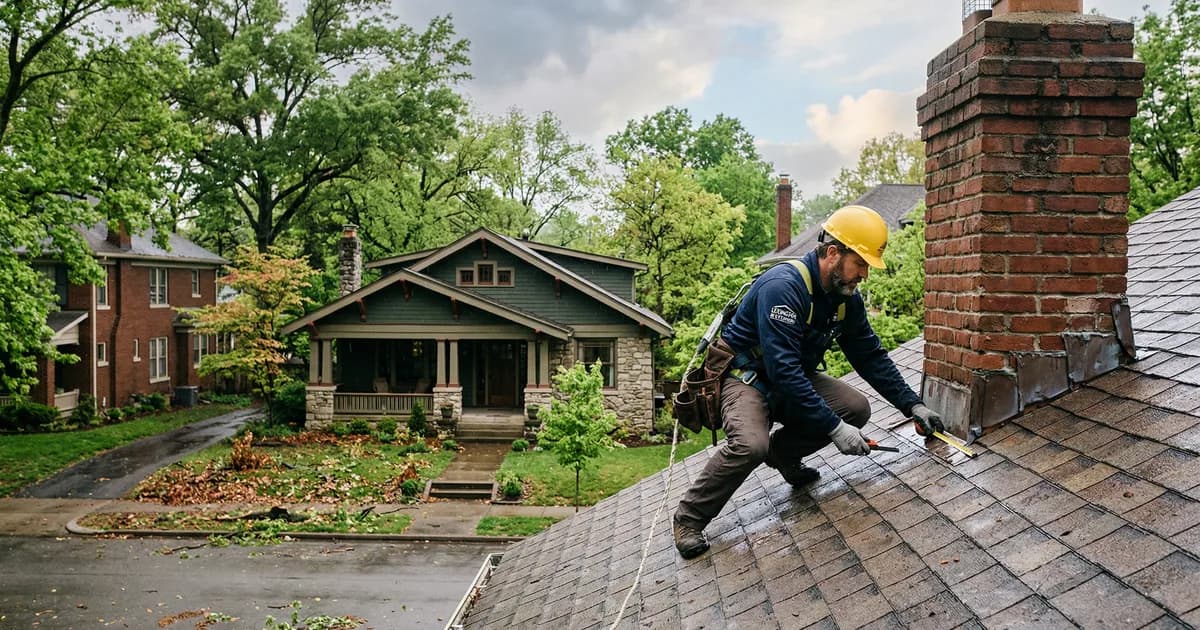
Most homes in Chevy Chase were built in the 1920s. Those Craftsman bungalows are gorgeous — the steep pitches, the exposed rafter tails, the wide overhanging eaves. But they come with challenges:
1. Original or early-generation slate roofing. A lot of these homes had slate roofs installed 80–100 years ago. Some still do. Slate can last a century, but individual tiles crack and slip over time, especially after freeze-thaw cycles like we had this past winter. A single displaced slate opens up a gap that can admit water on the next heavy rain.
2. Asphalt layovers on top of original materials. Over the decades, many of these homes got new asphalt shingles installed directly over existing layers. That adds weight and hides what's underneath. When wind gets under that layover system, it can lift entire sections — and you often won't see signs of it from ground level until there's interior damage.
3. Aging flashing and original wood decking. The valleys, chimneys, and dormers on these older homes were flashed with lead or early galvanized steel, much of which is now corroded or brittle. The wood decking underneath is also old-growth lumber — durable, yes, but not immune to decades of moisture infiltration.
4. Wind uplift on wide eaves. Those classic Craftsman overhangs that define the look of Chevy Chase? They're also a surface area for wind to get under. Properly maintained, they're fine. But when soffit boards start to fail — which they do in older homes — you get a pathway for wind and water that can wreck your insulation and attic structure.
What to Check After a Spring Storm — The Real Walk-Around
You don't need to get on your roof. You shouldn't get on your roof unless you're trained and have the right equipment. But here's what you can check from the ground and from inside your home:
From the ground:
- Walk the full perimeter and look for shingle granules collecting in your gutters or at downspout exits. Loss of granules accelerates shingle failure.
- Look for missing, curling, or cracked shingles — especially along ridge lines and at the edges.
- Check fascia and soffit boards for cracks, sagging, or gaps.
- Look at your chimney. Are any of the bricks displaced? Is the cap cracked or missing?
- Check for branches or debris on the roof surface.
From inside:
- Go into your attic with a flashlight after a storm. Look for wet insulation, water stains on the sheathing, or daylight coming through anywhere it shouldn't be.
- Check ceilings on the top floor for new water stains, bubbling paint, or soft spots in drywall.
Gutters and drainage:
- Clean, properly-pitched gutters aren't just convenience — they're part of your roof's water management system. Backed-up water during a storm can force its way under shingles at the eave line.
The Difference Between a Real Inspection and a Storm Chaser Pitch
After every major storm system comes through, door-to-door roofing contractors flood neighborhoods like Chevy Chase. I've seen this for 25 years. Some are legitimate, but a lot are what the industry calls "storm chasers" — out-of-state crews who show up, push you hard toward an insurance claim, do rushed work, and then vanish before you discover the problems.
Here's how to tell the difference:
Red flags:
- They "just happened to be in the neighborhood" immediately after the storm
- They pressure you to sign an Assignment of Benefits (AOB) right away — that signs away your rights to manage your own claim
- They won't give you a written estimate before you commit
- They offer to waive your deductible (this is insurance fraud in Kentucky)
- No local references, no Kentucky contractor license, no permanent address
What a legitimate inspection looks like:
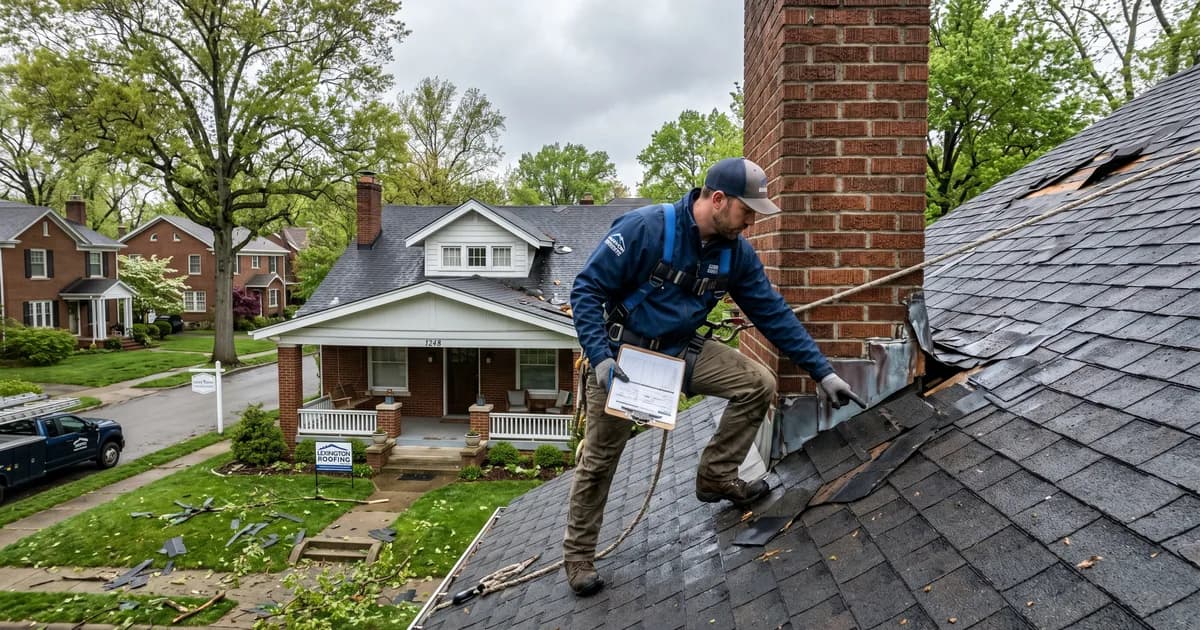
- A written inspection report with photos
- Clear documentation of what they found vs. what is pre-existing wear
- A conversation about whether the damage actually warrants a claim vs. a repair
- No pressure to decide on the spot
- A contractor who will still be in business next year when you need a callback
At Handy Manny's LLC, every inspection comes with a documented report. We've earned a 5.0 rating on Google across 56 reviews because we tell homeowners the truth — even when the truth is "you don't need a full replacement yet."
Insurance Claim or Out-of-Pocket Repair? How to Decide
This is the question I get most often. Here's my honest take:
File a claim if:
- There's documented hail damage across a significant portion of the roof surface (not just a few shingles)
- Wind has lifted or removed sections that require major structural repair
- Interior water damage is present and can be tied to a specific storm event
- Your roof is relatively new and the damage is clearly storm-caused
Pay out of pocket if:
- The damage is isolated — a few missing shingles, a cracked piece of flashing
- Your deductible is $2,500–$5,000 and the repair estimate is in that range anyway (filing a claim only to receive nothing after the deductible and potentially raising your premium doesn't make sense)
- The damage is primarily due to deferred maintenance — insurers will deny claims where wear and tear is the root cause
A good rule of thumb: get a professional inspection first, before you call your insurance company. That way you know what you're dealing with, and you can make a decision from a position of knowledge rather than panic.
Spring Exterior Checkup — Beyond the Roof
While we're up there (or around the perimeter), a complete spring checkup for a Chevy Chase home should include:
- Gutters and downspouts: Clear debris, check for proper pitch and secure attachment
- Soffit and fascia: Look for rot, paint failure, and gaps that let in pests and moisture
- Window and door casing: Check caulk lines — these are common water entry points on older homes
- Chimney and masonry: Tuckpointing is often needed on brick chimneys after winter, well before any storm damage occurs
- Exposed wood trim: Craftsman details are beautiful but need regular paint and caulk maintenance to stay that way
We do full spring exterior checkups as part of our inspection service. One visit, comprehensive walkthrough, written report. No upsell pressure.
Call Handy Manny's Before the Next Storm Hits
We're a minority-owned, owner-supervised company based right here in Lexington. BBB A+ rated. When you call (859) 551-5302, you get me or one of my crew — not a call center. We know Chevy Chase homes because we've worked on them for years.
Don't wait until there's water inside. Spring storm season in Central KY runs through late May, and proactive inspection is almost always cheaper than reactive repair.
Book your storm damage roof inspection: handymannysky.com | (859) 551-5302
Frequently Asked Questions
Q: How soon after a storm should I get my roof inspected?
A: As soon as possible — ideally within 24–72 hours. Kentucky insurance policies typically require you to report storm damage promptly. Waiting weeks can give the insurer grounds to argue that damage worsened due to neglect rather than the storm event. After any significant hail or wind event, call us and we'll get you scheduled.
Q: My Chevy Chase home has a slate roof. Is hail a big deal for slate?
A: Yes, more than most people realize. Slate is durable but brittle under impact. Hail can cause hairline fractures that don't cause immediate leaks but compromise the tile's ability to shed water over time. We inspect slate roofs with that in mind — ground-level photos alone aren't enough for slate.
Q: What does a storm damage roof inspection from Handy Manny's cost?
A: For most homes in Chevy Chase, we charge a flat inspection fee that gets credited toward any repair work we do. Call us at (859) 551-5302 for current pricing. We're not a free-inspection-as-a-sales-pitch operation — our inspections are thorough and documented.
Q: My neighbor got a "free inspection" from a crew that showed up after last week's storms. Should I use them?
A: Use caution. A free inspection offered right after a storm is often the first step in a storm chaser operation. That doesn't mean every post-storm offer is a scam — but before you let anyone on your roof or sign anything, verify their Kentucky contractor license, look up their reviews, and make sure they have a real local presence. We've been in Lexington for years. You can look us up.
Q: Can Handy Manny's help with the insurance claim process?
A: Yes. We can document damage with photos and a written report that supports your claim. We work alongside your adjuster, not around them. We don't do AOB arrangements — you stay in control of your own claim. That's the way it should be.
Handy Manny's LLC | Lexington, KY | (859) 551-5302 | handymannysky.com | BBB A+ | 5.0 Google Rating (56 Reviews) | Minority-Owned, Owner-Supervised