
Storm Damage Roof Repair in Chevy Chase (Lexington, KY): What to Do First
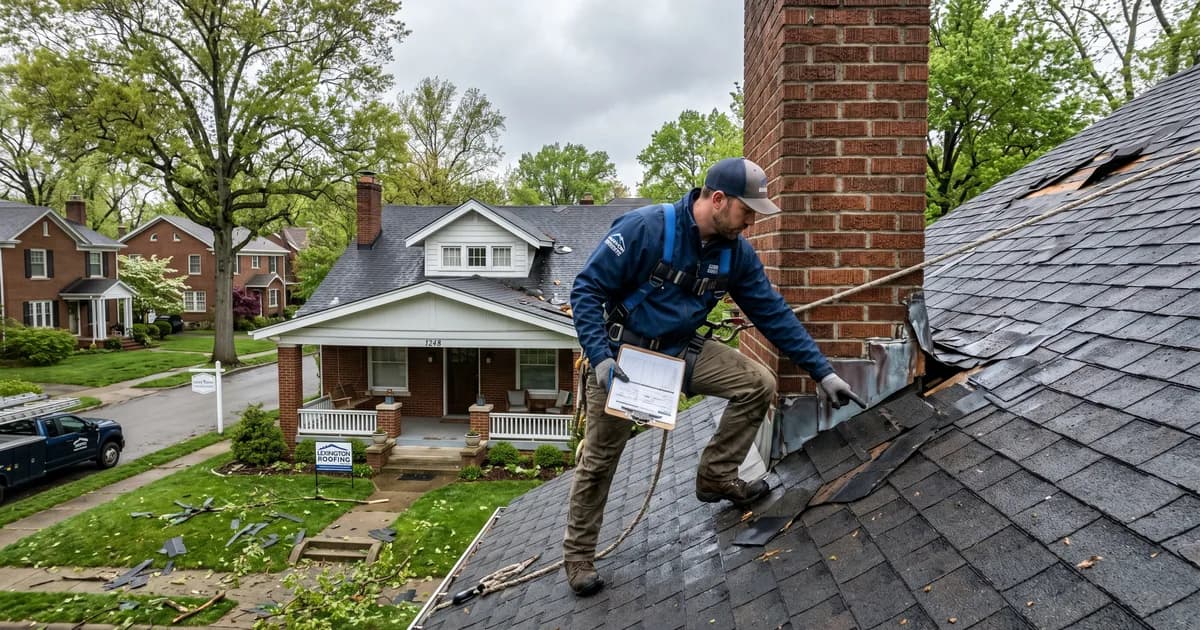
If you live in Chevy Chase, you already know the charm comes with some "old-house reality." A lot of these homes date back close to 100 years, and the roof systems on them are often more complicated than the newer subdivisions across town—steeper pitches, valleys, dormers, chimneys, and a bunch of flashing details that can fail when the wind starts pushing rain sideways.
After one of Kentucky's spring storms, I get the same calls over and over: "Manny, I've got a stain on the ceiling," "My gutter is overflowing," "I think a tree limb hit the roof," or "There's water in the attic." This post is a straight, practical guide for storm damage roof repair in Chevy Chase (Lexington, KY)—what to check, what not to touch, and how to keep a small problem from turning into a full interior rebuild.
Why Chevy Chase roofs get hit harder than you'd think
Chevy Chase is full of older homes (many originally built in the 1920s and 1930s) and a mix of architectural styles—Colonial Revival, Tudor influences, brick cottages, and a lot of additions over the decades. The good news is they're solid houses. The bad news is that additions and roof tie-ins are exactly where leaks like to show up.
Common storm-related weak spots I see in this neighborhood:
- Step flashing at brick chimneys (especially if it was "sealed" instead of properly flashed)
- Valleys where leaves and grit sit and hold water
- Dormer walls and the little kick-out flashings that are easy to miss
- Older box gutters or built-in gutters on some houses (they can hide rot)
- Loose ridge caps or lifted shingles from wind
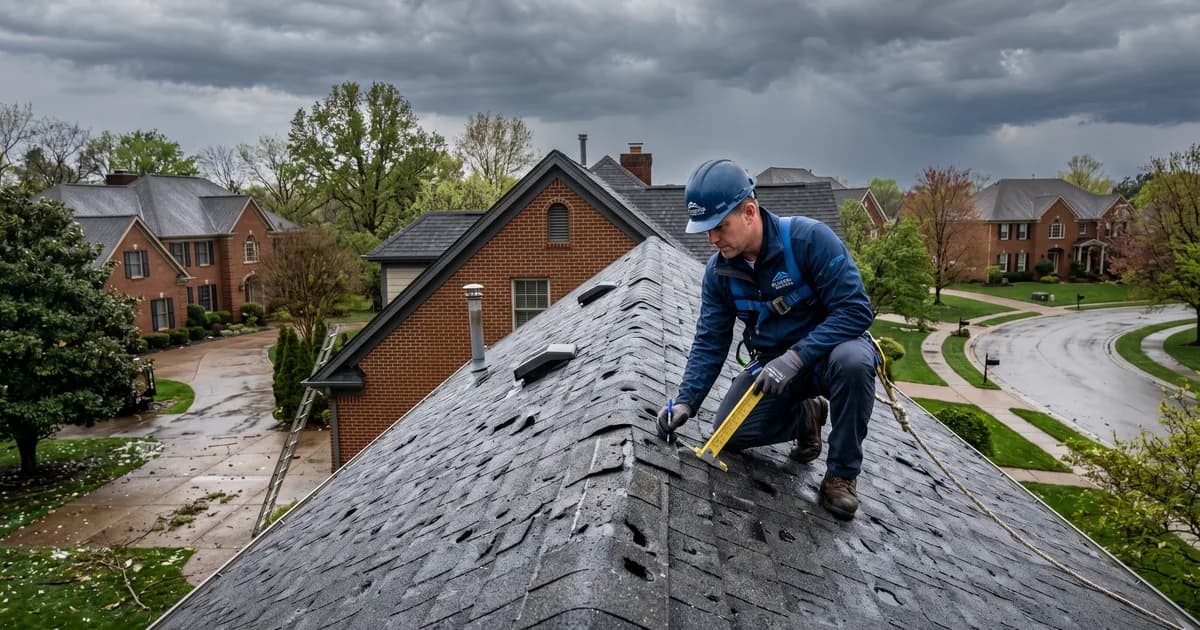
And here's the part most people don't realize: you can have "no missing shingles" and still have damage. Wind-driven rain can get up under edges, and hail can bruise shingles without tearing them off.
Quick storm severity reality check (so you know when to document)
When the National Weather Service calls it a severe thunderstorm, that's not just news hype. NWS defines a severe thunderstorm as one capable of producing hail at least 1 inch or wind gusts over 58 mph (NWS Louisville). Hail that size can damage roofs, vehicles, and windows, and strong straight-line winds can break limbs and put holes in shingles and siding (NWS Louisville).
If your area got warned for that kind of weather, treat your roof like it took a hit—even if everything "looks fine" from the street.
What to do first (the 60-minute checklist)
You don't need to be a roofer to do the first pass. You just need to be careful.
1) Take photos before you move anything
- Wide shots of the house and rooflines you can see
- Close-ups of any fallen limbs, dented gutters, siding damage, or torn shingles
- Photos of ceiling stains, bubbling paint, or wet drywall
If this becomes an insurance claim, good documentation saves weeks of arguing.
2) Check the attic (but don't step through the ceiling)
If you can safely access your attic:
- Use a flashlight and look for wet decking, dark stains, and drips at nails.
- Feel insulation (with gloves). Wet insulation is a problem even if the ceiling isn't stained yet.
If you're not comfortable up there, skip it. Falling through drywall is a terrible way to spend your weekend.
3) Walk the property and look for "roof clues" on the ground
- Granules piled at downspout exits
- Shingle pieces in the yard
- Bent gutter screens
- Nails or metal bits near the driveway
4) Do a controlled interior dry-out
If water is actively dripping:
- Put a bucket down
- If the ceiling is bulging, don't poke it until you've got plastic down and you're ready for a mess
- Run fans and a dehumidifier if you have them
The goal is to stop secondary damage (mold, swollen trim, ruined floors) while you line up repair.
What not to do (these are the mistakes that make it worse)
- Don't get on a wet roof. I've been doing this 25 years and I still respect wet shingles.
- Don't "tar it" unless it's truly emergency-only. Tar is a temporary patch that can complicate proper repairs.
- Don't ignore small stains. That stain is your warning light. Roof leaks travel; the entry point might be 10–20 feet away.
- Don't wait weeks for it to "dry out." Wet roof decking and insulation don't magically fix themselves.
The most common Chevy Chase storm repairs we handle
Here's what we typically do for homeowners in this part of Lexington:
Targeted leak repair (flashing + shingle replacement)
This is the best-case scenario: a few shingles lifted, a small flashing failure, or a pipe boot that cracked.
Valley cleanup + correction
If a valley is packed with debris, water can back up under shingles. We clean, inspect, and correct the valley detail if it was installed wrong.
Chimney and step-flashing rebuild
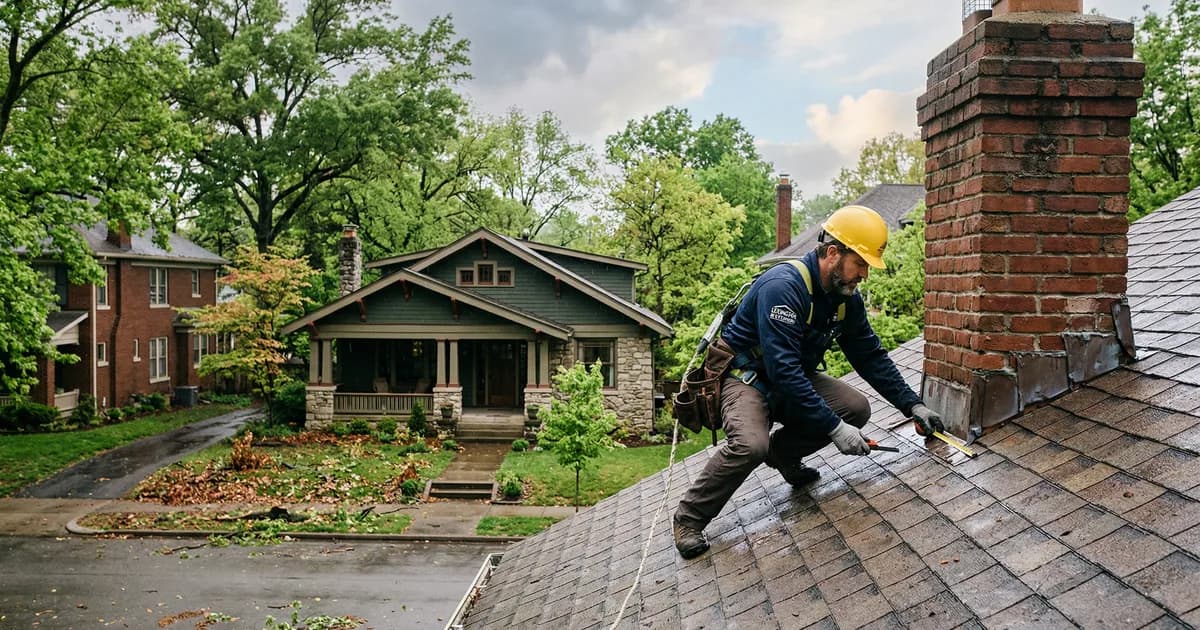
Brick chimneys move a little over time, mortar cracks, and bad caulk jobs fail in storms. Proper step flashing is the difference between "fixed" and "it'll leak again next month."
Gutter re-hang / downspout corrections
A storm can loosen gutters just enough to overflow behind them—then you're dealing with fascia rot and water getting behind trim.
Interior patch after the roof is sealed
I'm a general contractor, so we can handle the drywall repair, stain-blocking primer, trim replacement, and paint match after the exterior issue is actually resolved.
Insurance: when it makes sense and how to keep it simple
If you have a lot of hail strikes, a big limb impact, or widespread shingle damage, it's worth asking about a claim.
A few practical tips:
- Document everything immediately.
- Don't throw damaged materials away until you've got photos.
- If an adjuster comes out, be there (or have your contractor there).
And remember: insurance is great for sudden storm damage. It's not designed to pay for a roof that's simply worn out.
Why call Handy Manny's for roof work in Chevy Chase
I'm Manuel Santos—most people call me Manny. I've been in construction for 25 years and I've worked every trade hands-on.
When you call Handy Manny's LLC, you get:
- Owner-supervised work (I'm on it)
- Straight answers and practical options
- Care for older homes and the details that keep them dry
We're minority-owned, local, and we've earned a 5.0 Google rating with 56 reviews.
If you think you've got storm damage—or you just want a professional set of eyes on it—call (859) 551-5302 or book through handymannysky.com.
Chevy Chase notes (local context)
If you're near Ashland Avenue, Euclid, or over by the Chevy Chase shops, you're only about 10 minutes from downtown Lexington. That convenience is part of why people love this neighborhood. But the mature trees and older rooflines also mean after a big wind event, you're more likely to have limb damage and hidden flashing issues than you would in a newer, simpler roof system.
FAQs (Chevy Chase storm roof repair)
How do I know if my roof has hail damage if shingles aren't missing?
Hail can bruise shingles without tearing them off. The signs are granule loss, soft spots, and circular impact marks. A roof inspection can confirm it.
Can you do an emergency tarp in Lexington?
Yes. If the roof is actively leaking and there's an opening, we can tarp and then come back for the proper permanent repair once things are safe and dry.
How fast should I fix a small leak?
Immediately. Small leaks cause big damage because water travels. The earlier you handle it, the cheaper it usually is.
Do you only do roofing?
No. Handy Manny's LLC does general contracting—so if the storm caused interior drywall damage, trim issues, or paint problems, we can handle the full repair after the roof is sealed.
What's the best first step?
Call for an inspection and take photos. If it was a severe storm (large hail/high winds), assume there may be damage even if you can't see it from the ground.